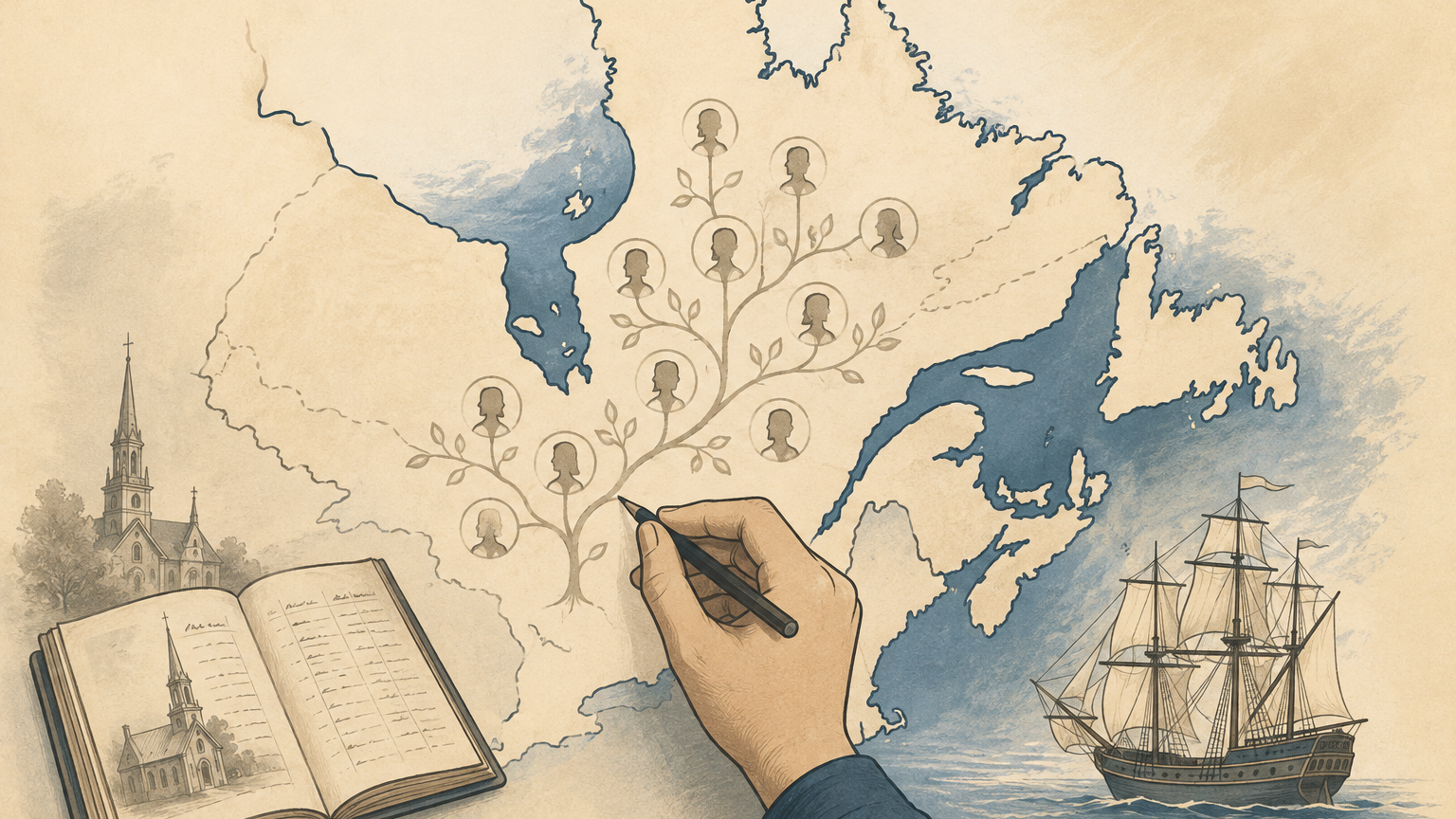
Few people in the world can trace their family tree as far, as fast, and as certainly as those with French-Canadian roots. Thanks to four centuries of meticulous Catholic parish records and the extraordinary databases built from them, a French-Canadian line can often be followed straight back to the original ancestor who stepped off a ship from France in the 1600s. French Canadian Roots is your guide to doing exactly that — and to everything that flows from it, from finding your fille du roi ancestor to claiming Canadian citizenship by descent.
New to French-Canadian genealogy? Follow this path.
Six steps from your living family back to the ancestor who stepped off a ship from France. Work through them in order, or jump to whatever you need.
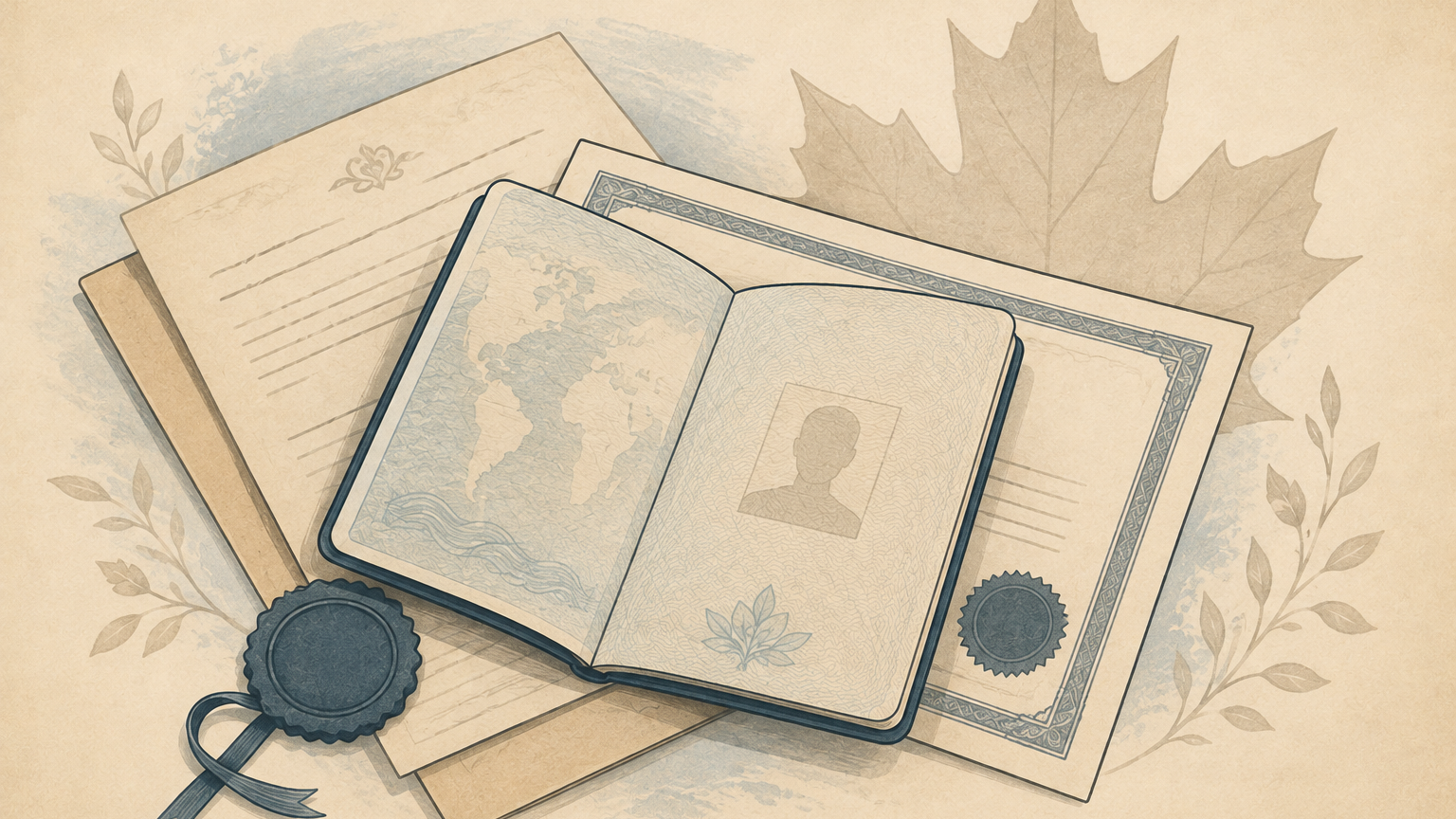
A 2025 law may make you Canadian — and Québec records can prove it
Bill C-3 reopened citizenship by descent through a Canadian-born grandparent or great-grandparent. The same parish registers that build your family tree can document the claim.
The craft of French-Canadian genealogy
Four centuries of meticulous Catholic parish records — and the databases built from them — let you follow a line further and faster than almost any other ancestry. Here’s how to use them.
Not sure where to start with your French-Canadian ancestry?
Get the French-Canadian Genealogy Quick-Start Checklist — a 6-step path to your first real ancestor record, plus the surname quirk that trips up almost every beginner.
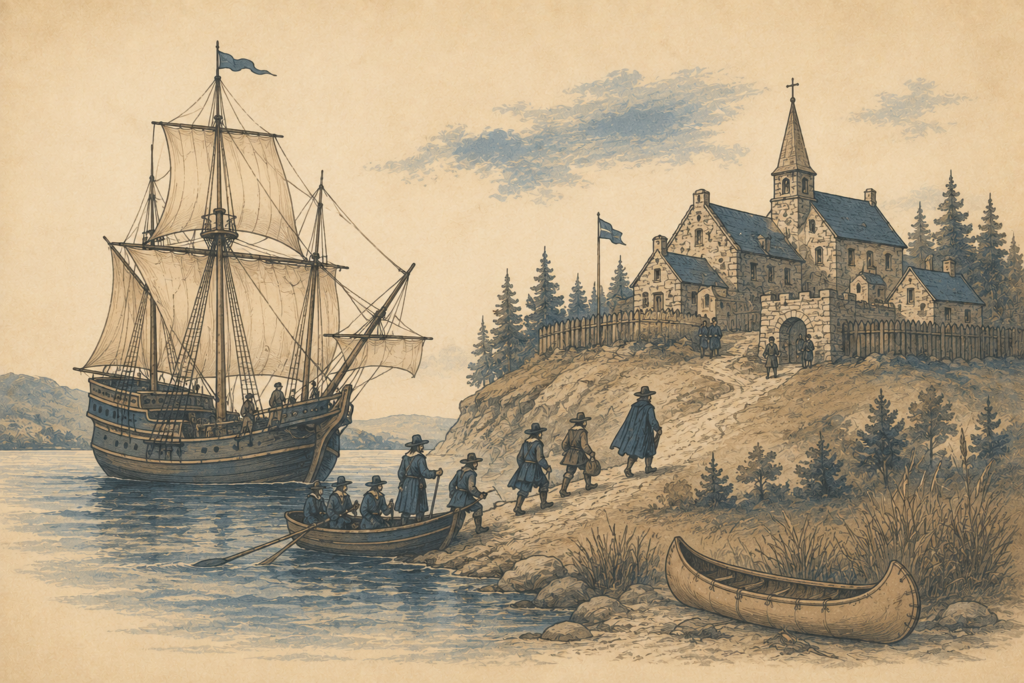
Almost everyone descends from the founders of the 1600s
A small founding population arrived from France in the 1600s and 1700s, and nearly every French-Canadian alive today descends from it. Find yours.
What your family name carries
French-Canadian names hide whole histories — a trade, a village, a nickname, even a second surname. Here’s how to read yours and search past every spelling of it.
The distinct story of Acadie
Acadian ancestry follows its own path — a separate colony, a brutal deportation, and a journey that ends, for many families, in the bayous of Louisiana.
From a DNA match to standing in your ancestral parish
Test your roots, follow the great Franco-American migration into New England, and turn records into a journey back to the places your family came from.