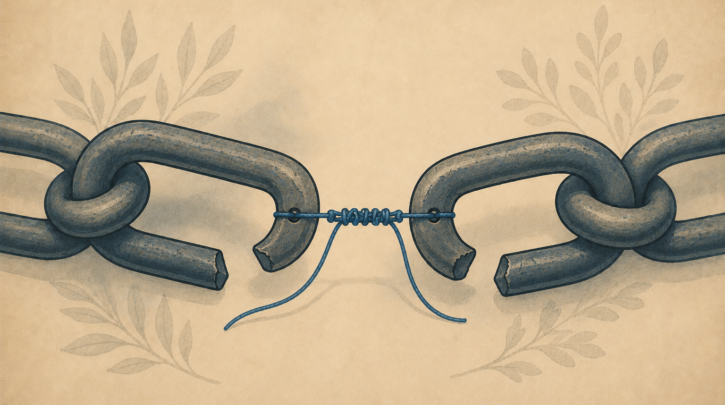

“Lost Canadians” is a phrase with decades of history and a sudden burst of new relevance. It describes people who lost, or never received, Canadian citizenship because of technicalities in outdated laws—and in 2026 it returned to the headlines as Bill C-3 restored citizenship to the most recent group and a government review briefly threw some new certificates into question. This article explains who the Lost Canadians are, how they came to be, and why the term may matter to your own family. It is general information, not legal advice.
Important: This article is general information, not legal advice, and we are not lawyers. Canadian citizenship rules changed recently and remain in flux—the documentary standard was tightened during a review in June 2026—and eligibility is determined individually by Immigration, Refugees and Citizenship Canada (IRCC). Always confirm the current rules on the official canada.ca website, and consult a licensed Canadian immigration lawyer or a Regulated Canadian Immigration Consultant (RCIC) about your own situation.
Where the term comes from
The Lost Canadians are not a single group but a series of them, each created by a quirk of citizenship law. Canada’s first Citizenship Act, in 1947, contained rules that stripped or withheld citizenship in ways that seem indefensible today—most notoriously, provisions that treated men and women unequally. A Canadian woman who married a foreign national could be unable to pass citizenship to children born abroad, while a Canadian man in the identical situation could. Other rules required people to actively “retain” citizenship by a certain age or risk losing it. Across the decades, these technicalities left many people who thought of themselves as Canadian without the status to prove it.
Not sure where to start with your French-Canadian ancestry?
Get the French-Canadian Genealogy Quick-Start Checklist — a 6-step path to your first real ancestor record, plus the surname quirk that trips up almost every beginner.
The fixes that came before
Canada has tried to repair this damage in stages. Legislative changes in 2009 and 2015 restored or granted citizenship to roughly 20,000 people caught by various old rules. But the 2009 amendments also introduced the first-generation limit—which, while solving some problems, created a new class of Lost Canadians: those born abroad in the second or later generation, cut off from a citizenship their families had carried.
How Bill C-3 fits in
Bill C-3, in force since December 15, 2025, is the law that addresses this most recent group. By removing the first-generation limit for those born abroad before that date, it restores a path to citizenship for second-and-later-generation descendants of Canadian citizens—the Lost Canadians the 2009 cap had stranded. For many people of Franco-American and broader Canadian descent, this is the change that turns “my family was Canadian once” into a question worth pursuing.
Wondering whether your family line might qualify? Start with our Am I a Canadian Citizen? overview—a plain-language walk-through of the questions that determine whether your case is worth investigating, with next steps if it is.
Why the term surged back in June 2026
The phrase leapt back into the news in June 2026 for an uncomfortable reason. IRCC emailed a number of people who had recently obtained citizenship certificates under Bill C-3—many of them U.S.-born descendants of Canadians—asking them to surrender the documents pending a review of the records behind their files. Headlines spoke of “Lost Canadians” once again at risk. Within days the department began revalidating many of those certificates, and the episode was widely reported as a reversal by the end of the month.
It is important to read what this was and was not. It was an administrative review of documentation—not an accusation of fraud, and not a change to who is eligible. Nobody’s underlying right under Bill C-3 was rewritten. But for a tense few weeks, people who had just been brought “home” feared being lost again, which is why the documentary standard—covered in documents for citizenship by descent—now sits at the center of every serious application.
Are you a Lost Canadian?
You may have a Lost Canadian in your tree if your family includes a Canadian-born ancestor whose citizenship failed to pass down because of the first-generation limit or an older technicality. The practical way to find out is to build the documented chain and assess it against the current rules, as described in am I a Canadian citizen? If the chain holds, the Lost Canadian in your family may be the anchor that makes you a citizen too.
Further reading (available on Amazon):
- The Lost Canadians: A Struggle for Citizenship Rights (Don Chapman)
Frequently asked questions
Is “Lost Canadian” an official legal category?
No. It is a widely used term for people left without citizenship by outdated rules, not a formal status. Whether any individual qualifies for citizenship is decided under the Citizenship Act as it currently stands.
Did the June 2026 review take away Lost Canadians’ citizenship?
It asked some recent certificate-holders to submit their files for documentary review and surrender the certificate in the meantime; many were revalidated. It was about proof, not eligibility—but anyone affected should consult a licensed professional.
The 1947 Act and its quirks
To understand the Lost Canadians, it helps to see how many different ways the old laws could strand a person. The 1947 Citizenship Act and the rules around it produced several distinct groups: people who lost status through a parent’s actions, war brides and their children caught by procedural gaps, people born abroad who had to formally retain their citizenship by a certain age under later rules and lost it when they didn’t, and those affected by the gender-based rules that treated Canadian mothers and fathers differently. Each quirk created its own category of people who considered themselves Canadian but, on paper, were not.
How the issue gained attention
The Lost Canadians did not fix themselves—the term and the cause were driven into public view by years of persistent advocacy, including campaigners who testified before Parliament and pressed successive governments to act. That pressure produced the partial fixes of 2009 and 2015 and, ultimately, helped set the stage for the court challenge and the legislation that became Bill C-3. The story is a reminder that citizenship law is not static; it has been repeatedly reopened and rewritten, which is also why anyone relying on it today should confirm the current state of the rules rather than an older summary.
For the deep history of the Lost Canadians and the campaign behind the reforms, Don Chapman’s account (below) is the standard popular treatment.
Lost Canadians and your research
For the family historian, the Lost Canadians story carries a practical message. If a Canadian-born ancestor sits a few generations back in your tree, the reason their citizenship never reached you may simply be one of the old technicalities—the first-generation limit, a retention rule, a gender-based provision—that Bill C-3 and its predecessors were meant to repair. That makes the genealogical work doubly worthwhile: the same documented chain that satisfies your curiosity about a Québec great-grandparent may also be the evidence that establishes a citizenship claim. The June 2026 review only sharpened the point that the chain must be built on properly sourced records. Trace the line, source every link, and you will know both who your family was and whether a citizenship they once held can be confirmed in you.