
In 1665, the largest body of French soldiers ever sent to the colony stepped ashore in New France: the Carignan-Salières Regiment, roughly 1,200 men dispatched by Louis XIV to break the power of the Iroquois. Their military campaign reshaped the colony’s security—but for genealogists, their lasting importance is what happened after the fighting. Several hundred soldiers stayed, took land, married (often Filles du Roi), and became founding ancestors. Here is how to tell whether one of them is yours.
Why the regiment was sent
By the 1660s, the colony was under severe pressure from the Haudenosaunee (Iroquois) confederacy, and its survival was in doubt. As part of the crown’s direct takeover of New France, Louis XIV ordered an experienced regiment to the colony to subdue the threat. The Carignan-Salières arrived in 1665, conducted campaigns over the following years, and secured a peace that allowed the colony to expand.
Not sure where to start with your French-Canadian ancestry?
Get the French-Canadian Genealogy Quick-Start Checklist — a 6-step path to your first real ancestor record, plus the surname quirk that trips up almost every beginner.
From soldiers to settlers
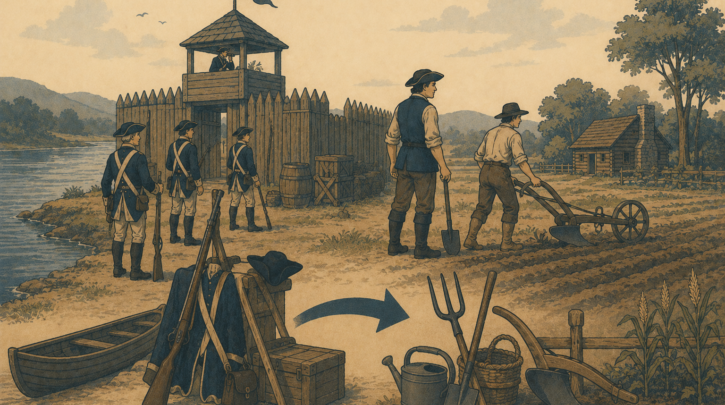
When the regiment was recalled in 1668, the crown offered strong incentives—land grants, provisions, and support—to soldiers and officers willing to remain and settle. Several hundred accepted. Officers in particular often received seigneuries, becoming the landholding founders of whole districts, while ordinary soldiers took up farms as habitants. This deliberate transformation of a fighting force into a settler population seeded a large share of the colony’s founding families.
How to identify a soldier ancestor
Soldier ancestors leave distinctive traces. Watch for these clues as you climb your tree:
- A marriage in the late 1660s or 1670s to a Fille du Roi or an early settler, with the man described as a soldier or newly arrived from France.
- A dit name of military flavor. Many soldiers carried noms de guerre—military nicknames—that became hereditary dit names. A surprising number of French-Canadian dit names originate as soldiers’ nicknames, so recognizing them can reveal a regiment ancestor.
- Association with a company. The regiment was organized into companies (named for their captains), and rolls survive listing many soldiers by company.
- A land grant or seigneurie received around the regiment’s 1668 disbandment.
Identifying your immigrant ancestor is a records job: work back through marriages on Généalogie Québec and PRDH-IGD until you reach the one born in France, then use the free Fichier Origine via BAnQ to pin down the French parish.
Records and reference works
Because the regiment is so well studied, you rarely research a soldier ancestor from scratch:
- Regimental rolls and company lists document many of the men by name.
- Genealogical societies dedicated to the Carignan-Salières soldiers (often paired with the Filles du Roi) maintain member research and lineage lists.
- PRDH-IGD and Jétté’s dictionary reconstruct the founding families the soldiers started.
- Fichier Origine often supplies a soldier’s French parish of origin.
Tracing the regiment back to France
The soldiers were recruited across France and embarked largely from western ports, so their origins are more geographically varied than those of civilian settlers. Once you identify your soldier and his company, Fichier Origine and the regimental scholarship can frequently point to his home region. From there, French research proceeds as in tracing your ancestry back to France.
Recommended reading (available on Amazon):
- Dictionnaire généalogique des familles du Québec (René Jétté)
- French-Canadian Sources: A Guide for Genealogists
Frequently asked questions
How many soldiers stayed in New France?
Of the roughly 1,200 who came, several hundred remained as settlers after the regiment was recalled in 1668, drawn by land grants and royal incentives.
Why do so many French-Canadian dit names come from the army?
Soldiers were assigned noms de guerre—nicknames—and when they settled, those nicknames often became hereditary dit names passed to descendants.
The companies and the campaigns
The regiment was organized into companies, each known by its captain’s name, and it was reinforced by other troops sent in the same period. After arriving in 1665, the soldiers built a chain of forts along the Richelieu River—the invasion route from Iroquois territory—and conducted campaigns into Haudenosaunee lands. The forts they raised became some of the earliest European settlements in their districts, and several soldiers later settled near where they had served, so a soldier ancestor’s company and posting can hint at where his family first put down roots.
Officers, seigneuries, and settlement
When the crown encouraged the troops to remain in 1668, officers were frequently granted seigneuries—large land concessions they were expected to develop and subdivide among settlers. These officer-seigneurs became the founding landholders of whole stretches of the St. Lawrence valley, and the soldiers who settled on their lands formed the first generation of habitants there. If your ancestor was an officer, he may appear in seigneurial records as well as the regimental rolls; if he was a common soldier, look for his land grant near a seigneurie established by his former officers.
Soldier dit names
One of the most useful research signals is the nom de guerre. Soldiers were routinely given military nicknames—often evoking a quality, a place, or nature—and when they settled, these nicknames frequently hardened into hereditary dit names. A family that carries both a surname and a dit name, with the line emerging around the late 1660s, is a strong candidate for regiment ancestry. Recognizing the dit name can be the clue that sends you to the regimental rolls in the first place.
A research walkthrough
- Climb your line to a marriage in the late 1660s or 1670s where the groom is newly arrived from France.
- Check whether he carries a dit name and whether he received land around 1668.
- Search the regimental rolls and society research for his name and company.
- Confirm the family with PRDH-IGD and look up his French origin in Fichier Origine.
After the regiment: from garrison to genealogy
The soldiers who stayed did more than start individual families—they helped convert a fragile colony into a settled society almost overnight. Hundreds of new households formed in just a few years as discharged soldiers married and took up land, and the demographic jolt of that settlement, combined with the arrival of the Filles du Roi in the same decade, is a large part of why the colony finally began to grow from within. For the genealogist, this concentration means that a single ancestral village along the Richelieu or the St. Lawrence may trace a striking share of its founding families to the regiment.
The bottom line: a marriage in the late 1660s to an early settler, a military-flavored dit name, and a land grant near a former officer’s seigneurie together make a strong case for a Carignan-Salières ancestor. Confirm with the regimental rolls and PRDH, then chase the French origin through Fichier Origine—and you have placed your family at the founding of New France’s permanent society.